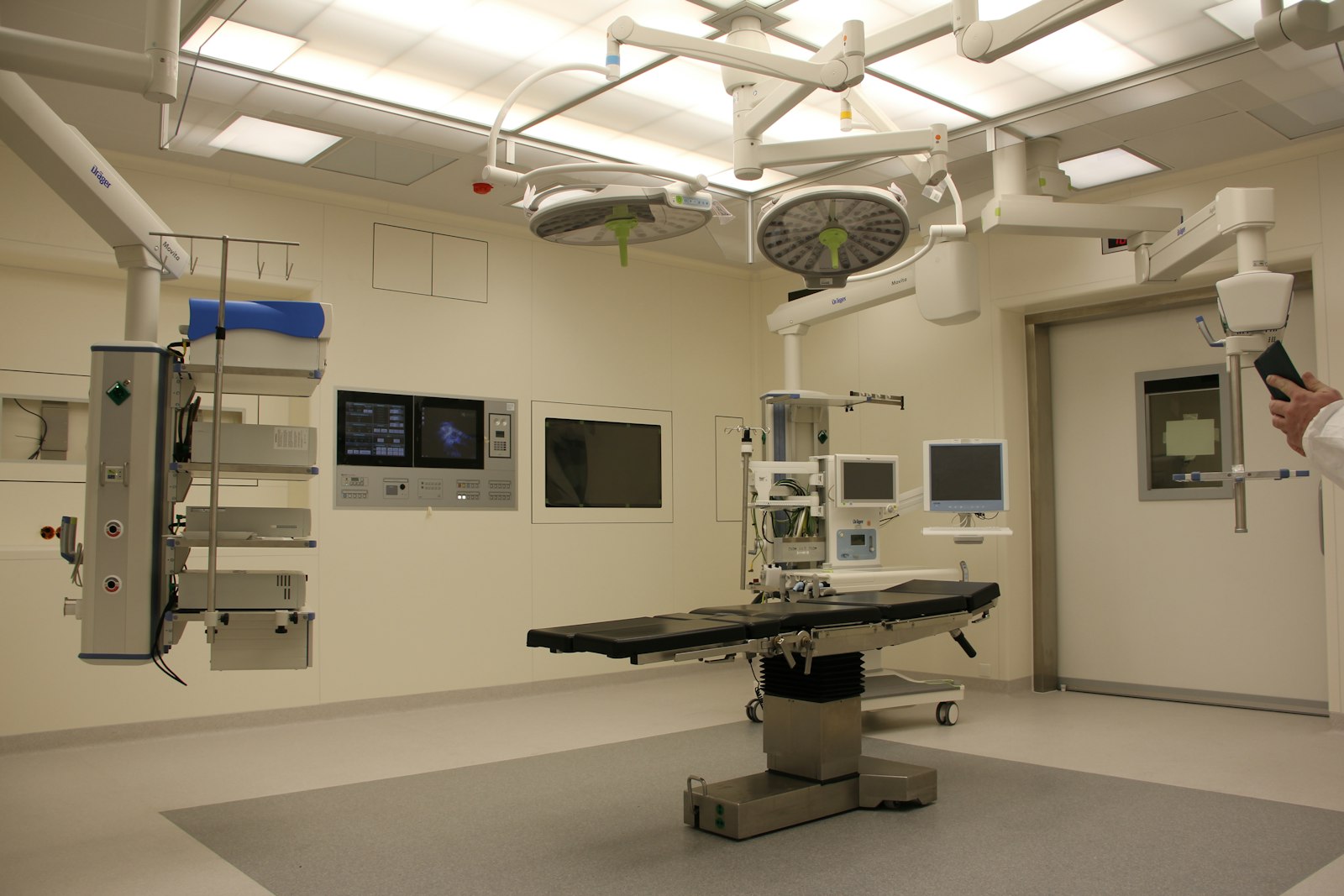
The arrival of table-integrated robots, live computer-vision copilots, and cloud-connected telemetry has transformed the surgical theater from an isolated procedural room into a mission-critical digital computing environment. To navigate this complexity, clinical engineering teams and surgical directors are adopting the 10-Point Surgical Intelligence Framework.
The 10 Evaluation Invariants
- Clinical Task Scope: Exact anatomical indication and boundary of software intervention.
- Control Hierarchy: Strict distinction between tele-operation, semi-autonomous guidance, and active bone cutting.
- Inference Latency: Sub-10ms glass-to-glass rendering on local edge accelerators (NVIDIA Holoscan).
- Fail-Safe Fallback Modes: Immediate mechanical disengagement in the event of software failure or tracking loss.
- Evidence & Provenance Logging: Cryptographically signed video and telemetry records for peer review and training.
- Regulatory Authorization: Verification of exact FDA De Novo or 510(k) cleared intended uses.
- Human-in-the-Loop Override: Mandatory surgeon confirmation for all procedural decisions.
- EHR & PACS Interoperability: Seamless DICOM image integration and automated operative report generation.
- Cybersecurity & Zero-Trust: Hospital network isolation preventing external telemetry tampering.
- Total Cost of Ownership: Evaluation of capital expenditure vs. consumable instrument per-procedure fees.
Verified Primary Sources & Citations
Every empirical claim, economic metric, and technical assertion in this publication is cross-referenced against primary research literature and regulatory records:
-
U.S. FDA Center for Devices and Radiological Health (CDRH) De Novo / 510(k) Database ↗
Regulatory clearance notices for J&J OTTAVA, Intuitive da Vinci 5, and AI navigation systems.
-
Johnson & Johnson MedTech Official Regulatory Announcement ↗
Clinical validation data on table-integrated zero-footprint robotic surgical architecture.
-
NVIDIA Clara & Holoscan Medical Edge AI Platform ↗
Technical specifications for sub-10ms intraoperative video telemetry and anatomical segmentation.
Discussion & Insights (0)
Join the discussion on Career Circle
Sign in or create a free account to post comments, ask questions, and engage with the author.